If you have ever prayed the Saint Michael prayer — “Saint Michael
the Archangel, defend us in battle” — you have prayed words written
by the pope in this episode.
And according to the tradition of the Church, he wrote them because
of something he heard.
On October 13th, 1884, after offering Mass, Pope Leo XIII collapsed
at the foot of the altar. When he recovered, he told those around
him what he had heard: a conversation between God and Satan — the
devil boasting that, given enough time and power, he could destroy
the Church.
In that same time window, the same pope sat down and wrote a constitution.
Not for the Church. For the STATE. A complete blueprint for what a
nation is supposed to look like when it actually believes God exists.
He called it Immortale Dei. And it became the most contested
encyclical in the modern Church.
▬▬▬▬▬▬▬▬▬▬▬▬▬▬▬▬▬▬▬▬▬▬▬▬▬▬▬
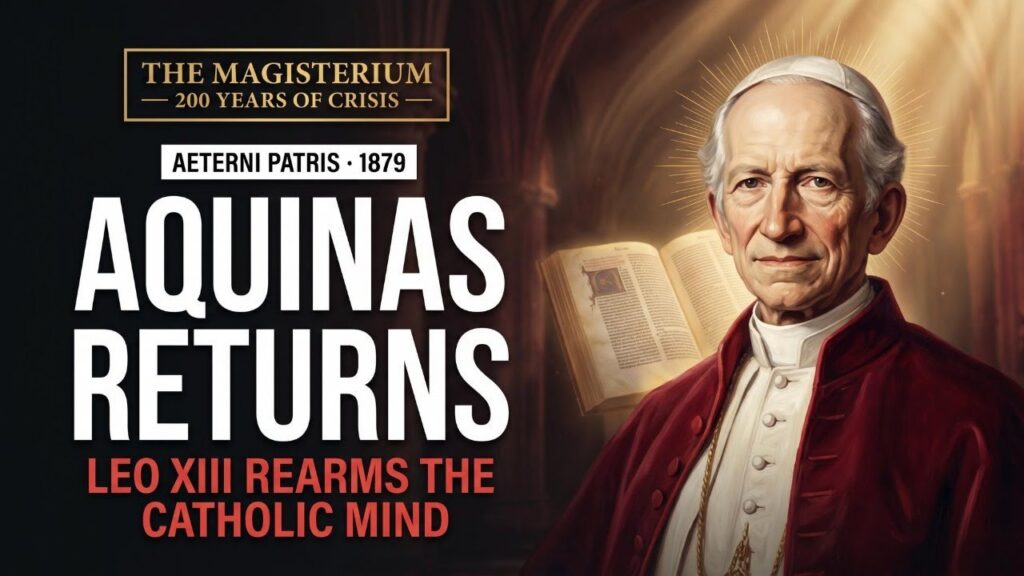
🏛 THE MAGISTERIUM — 200 YEARS OF CRISIS
Episode 6 of Rome Has Spoken: the chronological narrative of how
the Catholic Church answered the modern world, document by document,
from the French Revolution to today.
In this episode of Avoiding Babylon, we break down:
- The vision of October 13th, 1884 and the origin of the Saint
Michael prayer - Why Leo XIII wrote a “constitution for the state” in 1885
- The two powers: the spiritual and the temporal, both from God
- Why Immortale Dei says the state is NOT free to be neutral about God
- The thesis-hypothesis framework — and the phrase “error has no rights”
- The collision with Vatican II’s Dignitatis Humanae on religious liberty
- The rupture reading (Lefebvre, Ottaviani) vs. the continuity reading
(Benedict XVI’s “hermeneutic of continuity”) - Libertas, Rerum Novarum, and the Americanist controversy of 1899
- Why you cannot understand the modern crisis in the Church without
this document
Rome already spoke. We just stopped listening.