Video Description:
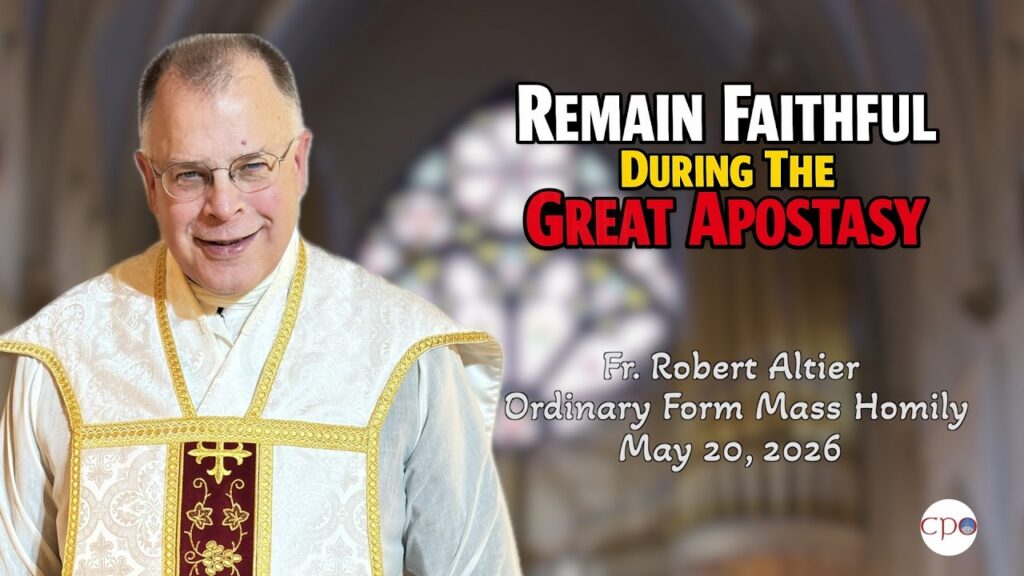
Who appointed today’s self-proclaimed “apostles”—and what biblical evidence proves that they possess authority over Christ’s Church?
A woman leaving the New Apostolic Reformation confronts the claims of modern NAR leaders who call themselves apostles and prophets. Hebrews 13:17 commands Christians to obey their leaders—but does that verse permit someone to appoint himself, establish an independent ministry and demand submission by claiming that God spoke to him?
In this revealing discussion, we examine:
- Why noble intentions cannot replace submission to Christ’s Church
- What Hebrews 13 actually teaches about legitimate spiritual authority
- Why self-appointment is not the biblical pattern
- The leaders appointed by the original apostles
- Why Acts identifies elders as bishops and overseers
- The biblical offices of bishop, presbyter and deacon
- Whether Philip’s prophetic daughters governed the Church
- How apostolic teaching and authority were transmitted
- What Ignatius of Antioch wrote about bishops, presbyters and deacons
- Why the earliest Christians called the Church Catholic
Acts 14:23 says that the apostles appointed elders in every church. Acts 20:17–28 identifies these elders as overseers entrusted by the Holy Spirit to shepherd God’s Church. Paul likewise describes bishops and deacons in 1 Timothy 3 and Philippians 1:1.
The decisive question is not whether someone claims to receive dreams, visions or private revelations. The question is whether that person possesses legitimate, identifiable authority connected to the Church established by Christ and governed by his apostles.
Who appointed your pastor—and who gave today’s supposed “new apostles” authority over you?
Subscribe, share this video, join the channel and support our ministry through Super Thanks.
Biblical references
Hebrews 13:7 — Remember the leaders who proclaimed God’s word and imitate their faith
Hebrews 13:17 — Obey legitimate leaders who watch over souls
Acts 14:23 — Paul and Barnabas appoint elders in every church
Acts 20:17, 28–32 — The Holy Spirit makes the Ephesian elders overseers to shepherd God’s Church
Acts 6:1–6 — The apostles formally appoint ministers through prayer and laying on of hands
Acts 21:8–9 — Philip’s daughters prophesy but are not presented as Church governors
1 Timothy 3:1–13 — Paul identifies bishops/overseers and deacons as established Church offices
1 Timothy 3:14–15 — The Church is God’s household and the pillar and foundation of truth
Titus 1:5–9 — Titus is commissioned to appoint elders in every city
Philippians 1:1 — Paul addresses the bishops and deacons of the Church
2 Timothy 1:6 — Timothy receives ministry through the laying on of Paul’s hands
2 Timothy 2:2 — Apostolic teaching is entrusted through successive generations
1 Corinthians 12:28 — Apostles and prophets appear among God’s gifts to the first-century Church
Ephesians 4:11–13 — Christ gives apostles, prophets, evangelists, pastors and teachers
1 Peter 5:1–4 — Peter commands elders to shepherd God’s flock
Acts 1:15–26 — Matthias is formally chosen to occupy Judas’s apostolic office